Author: Carol Driscoll

  • My Google Health Watch and Aria Scale Keep Track So I Don’t Have To

    My Google Health Watch and Aria Scale Keep Track So I Don’t Have To

    There are some things I enjoy keeping track of myself.

    And then there are things I’m perfectly happy to let technology keep track of for me.

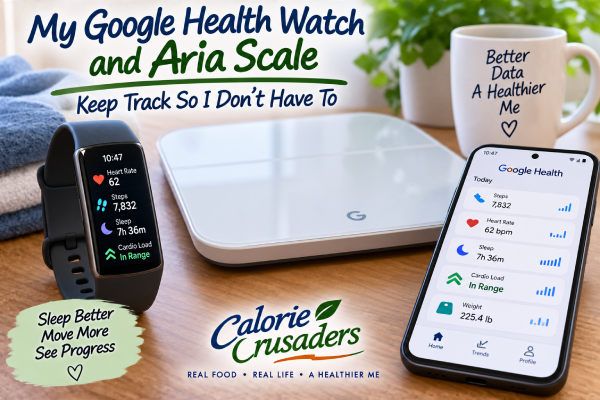
    That’s where my Google Health watch and Aria scale come in.

    I have a Charge 6, and I really like it. Of all the tools I’ve talked about so far on my Calorie Crusade, this is probably the one that collects the most information while requiring the least amount of work from me. And it syncs with Cronometer, which means some of the information from my watch can become part of the same picture as the food and nutrition information I’m already tracking.

    I put it on my wrist and go about my day.

    I Really Like Tracking My Sleep

    One of my favorite things to look at is my sleep.

    I wear my Charge 6 to bed, and in the morning I can see information about how I slept.

    I find that fascinating.

    Sleep is one of those things that can be difficult to judge. I might think I slept pretty well, but it’s interesting to look at the information my watch collected overnight.

    I’m not treating every number it gives me as a medical diagnosis.

    I’m looking for patterns.

    Did I get enough sleep? Am I sleeping better than I was a few weeks ago? Are there nights when I seem to sleep particularly well—or particularly poorly?

    It’s one more way to learn a little bit about myself.

    I Keep an Eye on My Resting Heart Rate

    Another number I really like keeping up with is my resting heart rate.

    My Charge 6 keeps track of it for me, and I can look back and see how it changes over time.

    Once again, I’m much more interested in the trend than I am in any one day’s number.

    There are all kinds of things that can affect resting heart rate, so I don’t look at one reading and draw a big conclusion from it. I just find it interesting to see what mine is doing.

    As I become more active, I can watch it and see whether there are changes over the weeks and months.

    That’s exactly the kind of information I enjoy.

    I don’t have to stop what I’m doing and take my pulse every morning or write anything down. My watch collects the information, and I can look at it whenever I want.

    Cardio Load Gives Me Something to Shoot For

    Another feature I’ve really come to like is cardio load.

    Instead of simply telling me that I should “exercise more,” Google Health gives me a weekly cardio target.

    I can see how much cardio load I’ve accumulated that particular day and how I’m progressing toward my weekly target.

    I really like having a range to shoot for.

    It turns exercise into something measurable.

    If I’m having a more active day, I can see the difference. If I’ve had several easy days, I can see that too.

    And because the goal is weekly, I have some flexibility.

    I don’t have to accomplish exactly the same amount every single day.

    Life doesn’t work that way anyway.

    Then There’s My Aria Scale

    My Aria scale may not be quite as exciting as all the information coming from my watch, but it is incredibly convenient.

    I step on it.

    It weighs me.

    And my weight gets recorded.

    That’s about as easy as record keeping gets.

    I don’t have to find a notebook. I don’t have to remember the number later. I don’t have to type it into something every time I weigh myself.

    It’s simply there.

    Over time, that gives me something much more useful than one morning’s weight.

    It gives me a history.

    I’m Interested in Trends, Not Just Today’s Number

    That’s becoming an important part of this Calorie Crusade.

    One day’s numbers aren’t particularly important by themselves.

    My weight can fluctuate.

    My resting heart rate can change.

    I can have one unusually active day or one very inactive day.

    I can have a great night’s sleep followed by a terrible one.

    What interests me is what happens over time.

    Am I becoming more active?

    Am I sleeping reasonably well?

    What is my resting heart rate doing?

    Is my weight gradually moving in the direction I want it to go?

    That’s the information I care about.

    Another Part of My Calorie Crusader Toolbox

    I’ve accumulated quite a toolbox.

    I have Cronometer to help me keep track of what I’m eating.

    I have my food scale to tell me how much I’m eating.

    I have a glucose meter because I’m curious about what my blood sugar is doing.

    And now I have my Charge 6 and Aria scale quietly collecting information in the background—everything from my activity and sleep to my resting heart rate and weight.

    None of these things will lose the weight for me.

    I still have to do that part.

    But they give me information, help me see progress and make the whole process more interesting.

    And I’ve already established one very important rule for this Calorie Crusade.

    I want this to be fun.

    For someone like me who enjoys watching the numbers and seeing what they’re doing, my Google Health watch and Aria scale make it just a little more fun.


  • Patti’s Juicy Turkey

    Patti’s Juicy Turkey

    A Family Thanksgiving Tradition

    This juicy citrus-roasted turkey is a Thanksgiving recipe that uses a wonderfully simple trick to help keep the turkey moist and flavorful. Instead of traditional stuffing, the cavity is filled with fresh orange, grapefruit, and lemon. The turkey is then roasted breast side down, with water in the bottom of the roasting pan.

    My sister Ellen brought this wonderful recipe into our family many years ago. But my sister Patti hosted our family Thanksgiving gathering every year. She cabbaged on to that recipe and made it her own, serving it for over 30 years!

    So naturally, in our family, it became Patti’s Juicy Turkey.

    The citrus adds a lovely flavor while the turkey cooks. Roasting the bird breast side down helps protect the breast meat from drying out. The result is a delicious Thanksgiving turkey without a long list of ingredients.

    Patti’s Juicy Turkey Calorie Calculator

    Estimate cooked turkey servings and calories from the weight of a whole raw turkey.

    Estimated total batch calories
    —
    Calories per 4-ounce serving
    —

    Estimated cooked edible turkey: —

    Estimated 4-ounce servings: —

    Estimated Nutrition per 4-Ounce Serving

    NutrientAmount

    Estimates assume 45% of the raw whole-bird weight yields cooked edible turkey, for planning purposes. Actual yield depends on the bird, roasting losses, and carving. Nutrition values represent approximate mixed light and dark meat; the with-skin figures are illustrative estimates. Citrus and discarded drippings are not counted.

    Patti’s Juicy Turkey Recipe

    Serving size: 4 ounces cooked turkey
    Servings: Varies depending on turkey size
    Estimated calories: 180 without skin or 220 with skin per serving

    Ingredients

    • 1 whole turkey, completely thawed
    • 1 orange
    • 1 grapefruit
    • 1 lemon
    • 3 cups water

    Food Safety Version (Recommended)

    1. Preheat the oven to 325°F.
    2. Remove the neck and giblets from the turkey.
    3. Cut the orange, grapefruit, and lemon into pieces.
    4. Loosely fill the turkey cavity with the citrus fruit. Do not pack it tightly.
    5. Place the turkey breast side down on a roasting rack inside a roasting pan.
    6. Pour 3 cups of water into the bottom of the pan.
    7. Roast the turkey uncovered at 325°F. Cooking time will depend on the size of the turkey.
    8. Use a food thermometer to check the thickest part of the breast and the innermost portions of the thigh and wing. All three locations must reach 165°F. The center of the citrus filling must also reach 165°F.
    9. Remove the turkey from the oven. Allow it to rest for approximately 20 minutes before carving.
    10. Remove and discard the citrus fruit. Discard the pan drippings.

    Food Safety Note: Always use a food thermometer to determine when the turkey is fully cooked. Do not rely on cooking time or appearance alone. The USDA recommends roasting turkey at an oven temperature of at least 325°F.

    Patti’s Original Method (Family Tradition)

    Patti prepared this turkey for our family Thanksgiving gatherings for more than 30 years. Her original method used the same citrus fruit, breast-side-down positioning, and water in the roasting pan.

    However, she roasted the turkey uncovered at 200°F for approximately one hour per pound. When using an electric roaster, she allowed an additional hour. And it was always tender and delicious!

    This traditional method is preserved here as part of our family’s recipe history.

    Important: Cooking a whole turkey at 200°F does not meet current USDA food-safety recommendations. Please use the Food Safety Version above when preparing this recipe.

    Nutritional Bonus

    Turkey is an excellent source of complete protein, providing all nine essential amino acids. It also supplies vitamin B12, selenium, phosphorus, and several B vitamins that help the body use energy from food.

    A Calorie Crusader Tip

    Thanksgiving is a day to enjoy good food and family traditions. A 4-ounce serving of turkey provides plenty of satisfying protein. Use the calorie calculator to estimate your portion, then make room for the holiday dishes you love!

    Calories Crusaders Recipes

    Calories per serving will depend on the size of the turkey, the portion served and whether the skin is eaten.

  • My Daily Kitchen Cleaning Routine Keeps Me Moving

    My Daily Kitchen Cleaning Routine Keeps Me Moving

    Our kitchen is the heart of our home. We use it constantly, and that means it gets messy constantly! My daily kitchen cleaning routine helps me stay on top of the mess while getting some light physical activity along the way.

    I’ve discovered that keeping my kitchen clean doesn’t have to be an overwhelming chore. I just need a plan.

    When the Kitchen Gets Away From Me

    We do a lot of cooking at our house. Between preparing meals, trying new recipes, and cleaning up afterward, our kitchen gets quite a workout.

    And sometimes the mess gets away from me.

    A few dishes in the sink become a pile. The countertops need wiping. The trash needs gathering. Before long, what should be a simple cleanup starts looking like a major project.

    That’s when I decided to try something different.

    My Daily Kitchen Cleaning Checklist

    I made a list of everything I need to do to get my kitchen back in order.

    Then I put that list in Google Calendar and set it to repeat every day.

    Now I don’t have to look around the kitchen and wonder where to begin. I just follow my list, one task at a time.

    Here’s my daily routine:

    1. Crack and refill the ice trays.
    2. Feed the pets.
    3. Put away the hand washed dishes.
    4. Unload the dishwasher if needed.
    5. Put the dishes in the dishwasher.
    6. Hand-wash any dishes that need it.
    7. Gather the kitchen trash and empty it if it’s full.
    8. Wipe down the kitchen surfaces.
    9. Clean the eating table.
    10. Set up the coffee for tomorrow morning.

    That’s it!

    By the time I’ve checked everything off, my kitchen is clean and ready for another day.

    Of course, with all the cooking we do, it won’t necessarily stay that way for long!

    Some Days Take 30 Minutes. Others Take Half a Day.

    Here’s something I’ve learned about household chores. They don’t have to be done all at once.

    Some days I have plenty of energy. I can work through my entire kitchen checklist in about 30 minutes.

    Other days are different.

    I may be tired. I may have other things to do. Or I may just not feel like tackling the whole kitchen at once.

    On those days, I take my time.

    I might load the dishwasher, then go do something else. Later, I’ll wipe down the counters. Eventually, I’ll finish the rest.

    Sometimes the entire process stretches across half a day.

    And that’s perfectly fine with me.

    The important thing is that I keep coming back to my list until everything is checked off.

    A Clean Kitchen Comes With a Bonus

    When I started this routine, my main goal was to keep the kitchen clean.

    But then I realized something.

    Every time I work through my checklist, I’m also getting some physical activity.

    I’m standing, walking, bending, reaching, and moving around the kitchen.

    None of it feels like a workout. I’m just doing things that need to be done.

    But all that movement adds up.

    I’ve written before about how I prefer productive activity over exercising just for the sake of exercise.

    Cleaning my kitchen fits that philosophy perfectly.

    And while light housework doesn’t replace every kind of exercise, it certainly contributes to my daily activity.

    If you’re curious about how many calories you might burn doing household chores, try our Everyday Activity Burn Calculator. It can help you estimate the energy you use doing ordinary activities around the house.

    Google Calendar Keeps Me on Track

    One of the best things about this routine is that I don’t have to remember everything.

    Google Calendar does that for me.

    My checklist repeats every day, so I always know what needs to be done.

    And there’s something satisfying about checking off each task.

    Instead of looking at a messy kitchen and thinking about everything I have to do, I can concentrate on one small job at a time.

    It’s a simple system, but it works for me.

    You don’t even need Google Calendar to try it. A checklist on the refrigerator or a piece of paper would work just as well.

    Small Habits Make a Difference

    One thing I’m learning on my Calorie Crusaders journey is that healthy habits don’t always require dramatic changes.

    Sometimes they’re ordinary things we do every day.

    Keeping the kitchen clean isn’t going to make the pounds magically disappear. But it helps me spend a little more time moving and a little less time sitting.

    It also gives me a sense of accomplishment.

    At the end of the day, I have a clean kitchen, a completed checklist, and some light activity under my belt.

    And I haven’t had to carve out extra time for a workout to get that movement.

    My Kitchen Is Clean. Now Where’s My Lounge Dress?

    I still enjoy sitting in my favorite chair and wearing my comfortable lounge dress.

    I’m not giving either one up!

    But I’ve discovered that I don’t have to spend my entire day in that chair.

    There are plenty of useful things I can do around the house that keep me moving.

    My daily kitchen cleaning routine is just one of them.

    And when the kitchen is clean, the pets are fed, and tomorrow morning’s coffee is ready, I can settle into that chair knowing I’ve accomplished something.

    Besides, I’ve earned a little time in my lounge dress!

    Happy Crusading!

  • Glenn’s Breakfast Burritos

    Glenn’s Breakfast Burritos

    These egg and potato breakfast burritos are one of those meals that can easily be breakfast, lunch or even supper at our house. Glenn makes them with eggs, potatoes, peppers, onions and cheddar cheese, so one burrito makes a substantial meal.

    I also like that the recipe naturally makes six servings. Glenn cooks everything together in one large skillet, divides the mixture into six portions and wraps each portion in a tortilla. That makes it especially easy when I’m counting calories because the portioning is already done for me.

    Glenn’s Breakfast Burritos

    Serving size: 1 burrito. Standard recipe: 6 burritos.

    Total batch calories2,334
    Calories per burrito389

    Ingredients

      Directions

      1. Cut the potatoes into approximately ¾-inch pieces.
      2. Boil the potatoes in water for 15–20 minutes, or until tender.
      3. While the potatoes cook, cut the bell pepper and onion into bite-size pieces. Season with salt and pepper.
      4. Heat the olive oil in a large skillet. Sauté the pepper and onion until tender.
      5. Drain the potatoes well and add them to the skillet.
      6. Crack the eggs directly over the potatoes and vegetables. Add more salt and pepper, then stir thoroughly.
      7. Immediately sprinkle the cheddar cheese over the mixture and cover the skillet. Cook until the cheese melts and the eggs are fully cooked.
      8. Divide the filling evenly among the selected number of burritos.
      9. Warm the wraps in the microwave according to the package directions.
      10. Place one portion of filling onto each wrap. Add Tabasco to taste, wrap, and serve.

      Estimated Nutrition Per Burrito

      NutrientAmount
      Calories389
      Total fat16.3 g
      Saturated fat4.9 g
      Cholesterol201 mg
      Sodium516 mg
      Total carbohydrates33.4 g
      Dietary fiber17.1 g
      Total sugars4.9 g
      Protein17 g

      Nutrition estimates are based on the six-burrito recipe entered in Cronometer. Changing the slider scales the full recipe and total calories; estimated nutrition per burrito stays the same. Salt and Tabasco added to taste are not separately calculated. Exact nutrition varies with ingredient brands and quantities.

      A Calorie Crusader Tip

      Dividing the skillet into six portions before filling the tortillas is an easy way to keep the serving sizes consistent. Each sixth of the skillet becomes the filling for one burrito, so you aren’t trying to eyeball six equal portions as you go.

      These burritos also refrigerate very well, which is one reason we like making six at a time. Glenn usually eats two and I eat one, so this recipe gives the two of us two complete meals. We eat three when they’re freshly made and refrigerate the other three for another meal.

      Calorie Crusders Recipes

      Calories are an estimate and will vary somewhat depending on the size of the potatoes, pepper and onion and the brands of ingredients used.

    • Don’t Let One Bad Weigh-In Ruin a Good Week

      Don’t Let One Bad Weigh-In Ruin a Good Week

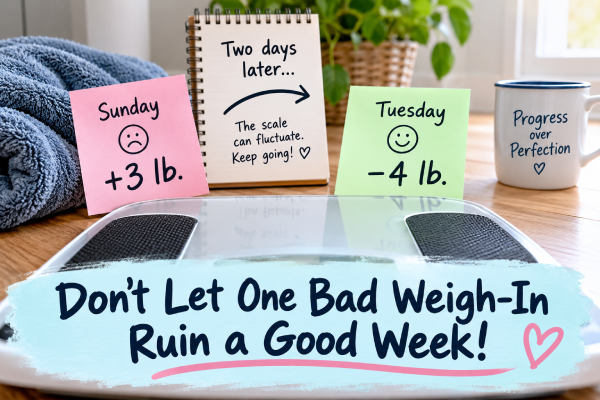
      Weight fluctuations during weight loss can be frustrating. Just when you think you’re doing everything right, you step on the scale and discover you’ve gained weight. That’s exactly what happened to Glenn this week. But two days later, the scale told a completely different story!

      Glenn’s Sunday Morning Surprise

      Sunday is weigh-in day at our house. Glenn and I have been working on losing weight together, and we look forward to seeing how we’ve done each week.

      This past Sunday, Glenn stepped on the scale and discovered he’d gained three pounds!

      He was understandably disappointed. He told me he didn’t think he’d done badly with his eating during the week. He’d been counting his calories and following his plan.

      I suggested that he wait a couple of days and weigh himself again on Tuesday.

      And I’m glad he did!

      When Tuesday morning arrived, Glenn stepped on the scale again. This time, he weighed four pounds less than he had on Sunday!

      That meant he was actually one pound lighter than he’d been at his previous week’s weigh-in.

      What a difference two days can make!

      Why Does Weight Fluctuate So Much?

      Our bodies don’t always cooperate with our bathroom scales.

      There are several reasons we might weigh more on one day than another, even when we’re following our calorie goals.

      • Water retention: Our bodies naturally hold different amounts of water from day to day.
      • Sodium: Eating salty foods can temporarily cause us to retain more water.
      • Digestion: Food and waste moving through our digestive systems affect what the scale shows.
      • Physical activity: Exercise and muscle recovery can temporarily affect water retention.
      • Normal body changes: Hydration, hormones, and other factors can influence daily weight.

      Glenn certainly didn’t lose four pounds of body fat between Sunday and Tuesday. Most of that change was probably water weight and other normal fluctuations.

      That’s why it’s important not to judge our progress by a single weigh-in.

      For more information about healthy weight management, visit the National Institute of Diabetes and Digestive and Kidney Diseases.

      Our Weight-Loss Goal Calculator Told a Different Story

      Here’s the part I find especially interesting.

      Even on Sunday, when Glenn’s scale showed a three-pound gain, our Weight-Loss Goal Calculator showed that he was still averaging a loss of 2.2 pounds per week since he started his weight-loss journey.

      And Glenn is only trying to lose one pound per week!

      Think about that.

      He was disappointed because he’d gained three pounds according to the scale. But when he looked at his overall progress, he was still ahead of his goal.

      That’s one of the reasons we created the Weight-Loss Goal Calculator.

      It doesn’t just tell you how much weight you’ve lost. It also calculates your average weekly weight loss based on your starting weight, current weight, and starting date.

      It helps you see the bigger picture.

      Of course, even that average can change when your weight temporarily fluctuates. But looking at your progress over several weeks gives you a much better perspective than focusing on a single day.

      Don’t Let the Scale Discourage You

      I’ve learned something important during my own weight-loss journey.

      There was a time when a disappointing weigh-in could really discourage me. I used to be quite a perfectionist about losing weight.

      If things didn’t go exactly as planned, I sometimes felt as though I had failed.

      But I’m learning to look at things differently.

      One day of eating a little more than planned doesn’t ruin my progress. And one disappointing weigh-in doesn’t mean my weight-loss plan isn’t working.

      What matters is what happens over time.

      If we’re consistently following a reasonable calorie goal and making progress over the long run, we don’t need to panic every time the scale moves in the wrong direction.

      We also don’t need to punish ourselves by drastically cutting calories after a disappointing weigh-in.

      We just need to keep going.

      Adjust your calorie intake as activity changes.

      Look at the Trend, Not Just the Number

      There’s nothing wrong with weighing yourself once a week. That’s what Glenn and I normally do.

      But sometimes a weekly weigh-in happens to fall on a day when we’re retaining extra water.

      That can give us a misleading impression of our progress.

      One option is to weigh more frequently under similar conditions and look at a weekly average. Another is to continue weighing weekly while comparing results over several weeks.

      The important thing is to find an approach that helps you stay informed without becoming discouraged.

      And remember, losing weight faster isn’t necessarily better. Glenn’s average of 2.2 pounds per week is faster than his one-pound goal. We’ll want to keep an eye on that trend to make sure his calorie intake and rate of loss remain appropriate.

      The Calorie Crusaders Lesson

      Glenn’s experience reminded both of us of something important.

      The scale tells us what we weigh at a particular moment. It doesn’t tell us the whole story of our weight-loss journey.

      On Sunday, Glenn thought he’d gained three pounds.

      On Tuesday, he discovered he was actually one pound lighter than the previous week.

      And all along, our Weight-Loss Goal Calculator was showing that he’d made substantial progress since he started.

      So the next time you step on the scale and see a number you don’t like, don’t give up.

      Take a look at your overall progress. Think about how consistently you’ve been following your plan. And remember that weight fluctuations during weight loss are perfectly normal.

      One bad weigh-in doesn’t mean you’ve had a bad week.

      Sometimes it just means you picked the wrong morning to step on the scale!

      Keep counting, keep moving, and keep crusading!

    • Why My Food Scale is One of My Most Important Tools

      Why My Food Scale is One of My Most Important Tools

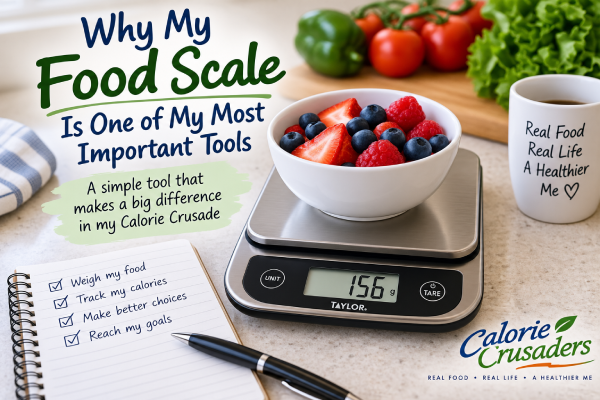
      There’s a little digital scale sitting on my kitchen counter.

      It isn’t fancy. It doesn’t tell me what to eat. It doesn’t count my calories for me, and it certainly doesn’t care whether I’m on a diet.

      But it may be one of the most important tools in my Calorie Crusader toolbox.

      It’s my food scale.

      How Much Am I Really Eating?

      Counting calories sounds pretty simple.

      Figure out how many calories are in your food, keep track of them and stay within your calorie budget.

      There’s just one little problem.

      You have to know how much food you’re eating.

      If a serving contains 150 calories, I’m not going to lose weight if I think I’m eating one serving when I’m actually eating a serving and a half most of the time.

      That’s where my food scale comes in.

      My Eyes Aren’t Measuring Cups

      I’ve learned that I’m not particularly good at looking at a pile of food and knowing exactly how much it weighs.

      I doubt many people are.

      An ounce of this, three ounces of that, 28 grams of something else—those amounts can be surprisingly difficult to judge just by looking at them.

      And some foods pack a lot of calories into a fairly small amount.

      So instead of guessing, I weigh it.

      That little number on the scale takes the guesswork out of the equation.

      Grams Make Things Easy

      One thing I’ve come to appreciate is weighing food in grams.

      Food labels often give serving sizes in grams, and Cronometer lets me enter foods by weight. That makes the food scale and Cronometer a pretty good team.

      I can put something on the scale, see exactly how many grams I’m eating and enter that amount.

      No guessing whether I had “about” a serving.

      I know.

      There’s a Button I Really Like

      If you’ve never used a digital food scale, there’s one little feature that makes the whole thing remarkably easy.

      The tare button.

      I can put my bowl or plate on the scale and press tare. The scale goes back to zero.

      Then I add my food, and the scale tells me only what the food weighs.

      I can even zero it again before adding another ingredient.

      It’s a tiny feature, but I use it all the time.

      Sometimes the Scale Surprises Me

      This may be one of the most useful things about weighing food.

      Sometimes I discover that the amount I thought was a serving was considerably more than a serving.

      Other times I discover I can have more than I thought.

      I like those surprises better.

      Either way, I have information I didn’t have before.

      And if there’s a recurring theme developing in my Calorie Crusade, it’s that I like information.

      Do I Have to Weigh Everything Forever?

      I don’t think the point is to become afraid to eat something unless there’s a scale nearby.

      There will be restaurant meals. There will be meals at someone else’s house. There will be times when weighing something simply isn’t practical.

      Then I’ll make my best estimate and move on.

      But at home, when my scale is sitting right there on the counter, why guess when I can know?

      The more often I weigh the foods I regularly eat, the better I also become at recognizing what reasonable portions actually look like.

      Another Tool in the Toolbox

      I’ve already written about Cronometer, which helps me keep track of my calories and nutrients.

      I have a glucose meter, which gives me another little window into what’s happening inside my body.

      And then there’s my food scale.

      It may be the simplest of the three.

      Put the food on it. Read the number. Enter the amount.

      That’s about it.

      But when I’m trying to count calories accurately, knowing how much I’m actually eating makes a tremendous difference.

      My food scale doesn’t decide what I can eat.

      It just keeps me honest about how much of it I’m eating.

      And on this Calorie Crusade, that’s a pretty useful little tool to have sitting on my kitchen counter.

    • Honey-Teriyaki Green Beans with Craisins and Pecans

      Honey-Teriyaki Green Beans with Craisins and Pecans

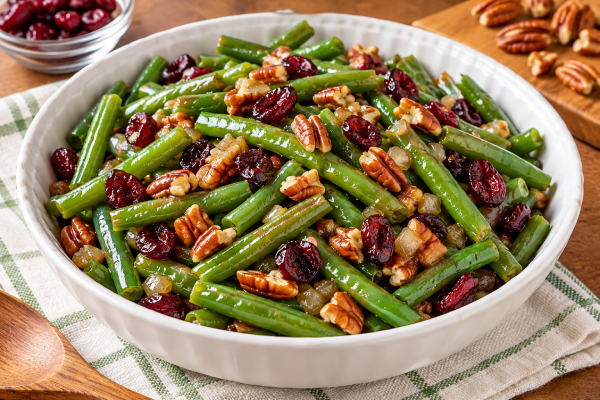
      These Honey-Teriyaki Green Beans with Craisins and Pecans turn an ordinary bag of frozen green beans into a colorful, flavorful dish. The teriyaki sauce and honey add a touch of sweetness, while the Craisins bring a little tang. Toasted pecans add a delicious crunch.

      This recipe is easy to prepare with simple ingredients and everyday measuring spoons. It starts with a 12-ounce bag of Great Value frozen green beans, so there’s no need to measure out part of a larger package.

      Serve these green beans alongside your favorite main dish, or enjoy a larger portion as a light meal. With our adjustable serving calculator, you can divide the recipe into 1 to 6 servings and see how each portion fits into your daily calorie goals.

      Visit our Calorie Crusaders Recipes page for more delicious ideas.

      Honey-Teriyaki Green Beans with Craisins and Pecans

      Total batch calories490
      Calories per serving163

      Slide from 1 to 6 servings. Ingredient amounts stay the same; nutrition per serving changes.

      Ingredients

      • 12 oz Great Value frozen green beans
      • 3 tablespoons Ocean Spray Original Craisins (dried cranberries)
      • 3 tablespoons chopped pecans
      • 3 tablespoons finely diced onion
      • 2 teaspoons olive oil
      • 2 tablespoons Great Value teriyaki sauce
      • 1 teaspoon honey
      • 1–2 tablespoons water, only if needed

      Instructions

      1. Toast the pecans. Add pecans to a dry skillet over medium heat. Stir for 2–3 minutes until fragrant; remove and set aside.
      2. Cook the onion. Add olive oil to the skillet and sauté onion for about 3 minutes.
      3. Cook the green beans. Add frozen green beans. Cook for about 6–8 minutes, stirring occasionally, until tender and most moisture has evaporated. Add a little water only if needed.
      4. Add flavor. Stir in teriyaki sauce, Craisins, and honey. Cook about 2 minutes more.
      5. Finish. Fold in toasted pecans just before serving.

      Estimated Nutrition

      NutrientWhole batchPer serving
      Calories490 kcal163 kcal
      Total fat26 g8.7 g
      Carbohydrates65 g21.7 g
      Total sugars31 g10.3 g
      Protein10 g3.3 g
      Sodium1330 mg443 mg

      Nutrition values are preliminary estimates based on typical ingredients and may differ from actual product labels, especially sodium and sugars. Calculated per-serving values are rounded. Water adds no calories.

      Calorie Crusaders Tip

      A side dish doesn’t always have to stay on the side!

      Sometimes a flavorful vegetable dish is just what you’re in the mood for. These Honey-Teriyaki Green Beans with Craisins and Pecans can be enjoyed as a traditional side dish or as the main attraction.

      Our serving calculator makes it easy to decide how much you want. Slide it to 3 for a generous side dish, or all the way down to 1 if you plan to enjoy the entire batch.

      Just remember that green beans, Craisins, and pecans provide relatively little protein. If you’re making this your meal, consider adding a protein-rich food to help make it more nutritionally balanced.

      The goal isn’t to give up foods you enjoy. It’s to make them fit your day!

      Curious about the sugar in honey, dried cranberries, and sauces? Read our Added Sugar resource to learn how added sugars fit into your daily nutrition goals.

    • How I Adjust Calories on Sedentary Days and Stay on Track

      How I Adjust Calories on Sedentary Days and Stay on Track

      Some days I get plenty of movement. I cook, clean, take care of the chickens, walk around the house, and generally stay busy.

      Then there are other days.

      Those are the days when my chair starts calling my name. My lounge dress gets involved. Before I know it, the two of them are working together against me.

      Some days I just don’t want to move.

      But I’ve discovered something important. I can adjust calories on sedentary days and still stay on track with my weight loss.

      And now I have a weapon to use against that chair.

      Not Every Day Is Going to Be an Active Day

      I’ve been paying much more attention to my activity lately.

      I’ve learned how much of a difference ordinary movement can make. Cooking, cleaning, walking, and doing chores all count.

      But I’ve also learned something else.

      I’m not going to be equally active every day.

      Sometimes I’m tired. Sometimes I don’t feel like doing much. The weather may be bad. I might not feel well. Or I might simply have one of those days when my chair seems unusually comfortable.

      That doesn’t mean my weight-loss plan has to go out the window.

      I Can Change the Calculator Instead

      Our Weight Loss Calorie Calculator lets me choose my activity level.

      So, if I’ve had a sedentary day, I can set the calculator to sedentary.

      Then I can see approximately how many calories I can eat while still working toward my weight-loss goal.

      That’s a big deal for me.

      Before, I tended to think mostly about how many calories I planned to eat each day. Now I’m looking at both sides of the equation.

      How much am I eating, and how active am I?

      If my activity changes, my calorie needs change too.

      A Sedentary Day Doesn’t Mean I Failed

      This may be the most important thing I’ve learned.

      Having a sedentary day doesn’t mean I’ve failed.

      I don’t have to look at the clock late in the afternoon, realize I haven’t done much, and decide the whole day is ruined.

      Instead, I can make an adjustment.

      I can put my information into the calculator, choose sedentary as my activity level, and look at my options.

      Maybe I still want to aim for my usual rate of weight loss. Or maybe I decide that a slightly smaller calorie deficit makes more sense that day.

      Either way, I’m making a conscious decision.

      I’m still in control of my plan.

      My Weight-Loss Plan Can Bend Without Breaking

      I’m beginning to realize that flexibility may be one of the things that helps me stick with this long term.

      I don’t need every day to look exactly the same.

      On an active day, I may have more room in my calorie budget.

      On a sedentary day, I may need less food because I’m burning fewer calories.

      The important thing is that I have a way to adjust.

      That’s much better than expecting myself to be perfectly active every single day.

      The Chair Has Finally Met Its Match

      For quite a while, I’ve joked that my chair and my lounge dress have been conspiring against me.

      I still don’t entirely trust either one of them.

      Some days I win. Some days the chair wins. And some days I suspect my lounge dress is working for the chair.

      But now the balance of power has shifted.

      I have the Weight Loss Calorie Calculator.

      If the chair wins the activity battle for one day, that doesn’t mean it gets to win the whole war.

      I can adjust my calorie intake and keep going.

      And tomorrow?

      Tomorrow I’ll get up and try again.

      Calorie Crusaders Tip

      Don’t use a sedentary day as a reason to give up on your plan. If your activity is lower than usual, recalculate your calorie needs for that activity level. You may find that a small adjustment is all you need to stay on track.

      Calorie estimates are only estimates. Individual calorie needs can vary based on metabolism, body composition, health, medications, and other factors. The Calorie Crusaders calculators are intended for general informational purposes and are not a substitute for medical or nutritional advice.

    • One Big Chocolate Chip Cookie

      One Big Chocolate Chip Cookie

      One Cookie, No Temptation

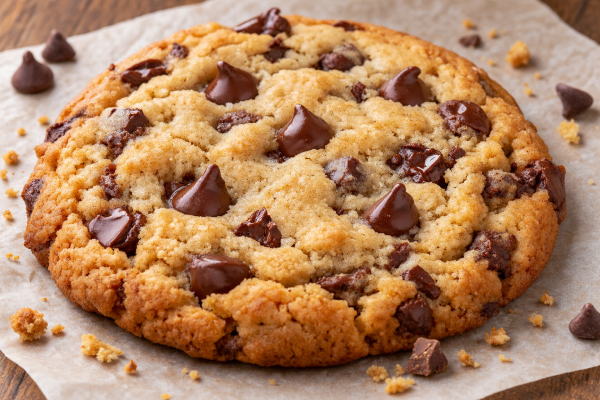
      One of the things I love about this single serve chocolate chip cookie recipe is that it makes just one cookie. I don’t have to worry about a whole batch sitting in the pantry, calling my name every time I walk through the kitchen!

      And I can still enjoy a warm, homemade chocolate chip cookie without giving up on my weight loss goals. The portion slider makes it easy to adjust the recipe to fit my calorie budget.

      There’s even a little bonus for Peaches. Since the recipe only calls for one tablespoon of whisked egg, she gets the leftover egg, cooked of course!

      Snacks and Treats

      Calorie Crusaders Tip

      Enjoy your homemade cookie, count it, and move on. No cookie jar calling your name!

    • Intermittent Fasting for Weight Loss: It’s Becoming a Way of Life

      Intermittent Fasting for Weight Loss: It’s Becoming a Way of Life

      I have found a really good weapon for my Calorie Crusader arsenal.

      When I first started intermittent fasting for weight loss, I wasn’t sure how well it would work for me. I knew the idea was simple. Eat during a certain number of hours each day and fast during the remaining hours. But would I enjoy it? Would I be hungry all the time? Could I actually stick with it?

      As it turns out, I love it!

      In fact, intermittent fasting has become one of my favorite tools for managing my calories. It feels so natural that I can see myself eating this way for the rest of my life.

      My 16/8 Intermittent Fasting Schedule

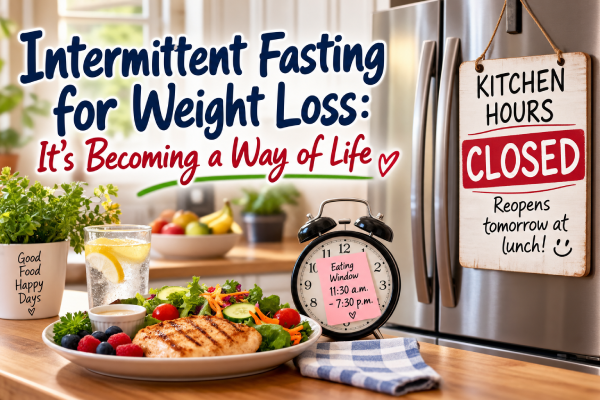
      I follow what is commonly called the 16/8 method. That means I have an eight-hour eating window followed by a 16-hour fast.

      Most days, I don’t even think about eating until around 11:30 a.m. or noon. Then I close the kitchen around 7:30 or 8:00 p.m.

      And that’s it!

      I don’t spend my mornings watching the clock or wishing I could have breakfast. I’m simply not hungry.

      The surprising thing is how quickly I adjusted. I expected that skipping breakfast might be difficult. Instead, this schedule felt natural almost immediately.

      My Calories Stretch Further

      This is probably my favorite thing about intermittent fasting.

      I have a daily calorie budget. Whether I spread those calories across 12 hours or eight hours, the total is still the same.

      But here’s the difference.

      When I eat during a shorter window, I have fewer hours to divide those calories between. That gives me more room for satisfying meals and even a snack or treat.

      I’m not trying to make my calories disappear. I’m simply making them work better for me.

      And believe me, when you’re trying to lose weight without giving up the foods you love, that makes a difference!

      I’m Not Fighting Hunger

      One of the biggest surprises has been how comfortable I feel during my fasting hours.

      I don’t get hungry during that 16-hour period. I don’t wake up thinking about breakfast. And I don’t feel deprived.

      That doesn’t mean everyone will have the same experience. Some people may find fasting uncomfortable or difficult.

      But for me, it has been remarkably easy.

      I think that’s one reason I enjoy it so much. I’m not spending my days fighting against my appetite.

      Instead, I’ve found a routine that seems to fit the way I naturally want to eat.

      My Kitchen Has Business Hours

      Now, this part makes me laugh.

      I’ve always had a kitchen that was open whenever I wanted something to eat. Morning, afternoon, evening, or late at night, the refrigerator was ready to serve.

      Not anymore!

      These days, my kitchen has business hours.

      Around 8:00 p.m., we’re closed!

      The refrigerator may still be running, but I’m officially off duty.

      And the funny thing is, I don’t mind a bit.

      Once I’ve finished eating for the evening, I don’t feel the need to wander back into the kitchen looking for something else.

      Apparently, even my refrigerator can learn to respect a schedule!

      I’m Flexible When I Need to Be

      I don’t believe a weight-loss plan should make everyday life unnecessarily difficult.

      Some mornings, I have several hours of heavy housecleaning ahead of me. That’s a lot of physical activity, and I may need breakfast before getting started.

      On those days, I eat breakfast.

      I’m not going to ignore my body’s needs just to keep a perfect fasting schedule.

      The next day, I can return to my usual routine.

      To me, that’s part of making this a lifestyle rather than another strict diet.

      Intermittent Fasting Isn’t Magic

      I want to make one thing clear.

      Intermittent fasting doesn’t make calories stop counting.

      I still pay attention to what I eat. I still measure portions and use my calorie calculator. And I still work toward staying within my daily calorie budget.

      For me, the benefit is that intermittent fasting makes those things easier.

      I have fewer hours available for eating, and I’m more satisfied with the meals I enjoy during that time.

      It’s also important to remember that intermittent fasting isn’t right for everyone. Some people need regular meals because of medications or medical conditions. Anyone considering fasting should make sure it’s appropriate for their health.

      I Think I’m Here to Stay

      When I started Calorie Crusaders again, I wanted to find a way to lose weight that I could actually live with.

      I didn’t want to give up all my favorite foods. I didn’t want to be miserable. And I certainly didn’t want another plan that I would abandon after a few weeks.

      Intermittent fasting has turned out to be a wonderful fit for me.

      I enjoy my meals. I feel satisfied. And I don’t spend my fasting hours wishing I could eat.

      Most importantly, I don’t feel like I’m enduring something temporary.

      I feel like I’ve found a way of eating that I can happily continue for years to come.

      And that’s a pretty wonderful feeling.

      So, if you’re looking for me before noon, I’ll probably be enjoying my morning coffee.

      The kitchen doesn’t open until lunchtime!

      Another weapon for my Calorie Crusader arsenal.

      Happy crusading!


      Calorie Crusaders Reminder: This article shares my personal experience, not medical advice. Intermittent fasting affects people differently and may not be appropriate for everyone. Talk with your healthcare professional before starting, especially if you have a medical condition or take medication that may be affected by fasting.