
If you track what you eat, you have probably seen saturated fat listed right along with calories, protein, fiber and other nutrients. But what exactly is saturated fat, and how much is too much?
Saturated fat isn’t something you necessarily have to eliminate from your diet. In fact, that would be difficult to do because it occurs naturally in many foods. What matters is keeping an eye on how much you’re eating and making healthier choices when you can.
What Is Saturated Fat?
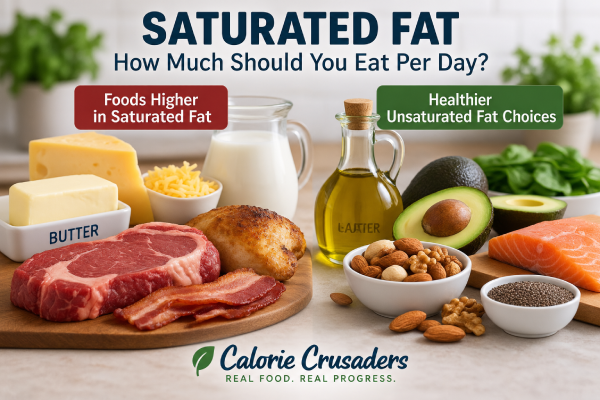
Saturated fat is one type of dietary fat. It is found naturally in many animal foods and in some plant foods.
Common sources include:
- Butter
- Cheese
- Whole-fat dairy products
- Beef
- Pork
- Poultry, especially the skin
- Lard
- Coconut and coconut oil
- Palm and palm kernel oils
- Some baked and fried foods
Eating too much saturated fat can raise LDL cholesterol, often called “bad” cholesterol. Higher LDL cholesterol is associated with an increased risk of heart disease and stroke.
How Much Saturated Fat Should You Eat?
This is where things can get a little confusing because you may see different recommendations.
The World Health Organization recommends limiting saturated fat to 10% or less of your total daily calories and suggests reducing it further when possible.
The American Heart Association recommends a more restrictive goal of less than 6% of total daily calories from saturated fat.
So what does that mean in actual grams?
| Daily Calories | 10% of Calories | 6% of Calories |
|---|---|---|
| 1,200 | about 13 g | about 8 g |
| 1,400 | about 16 g | about 9 g |
| 1,600 | about 18 g | about 11 g |
| 1,800 | about 20 g | about 12 g |
| 2,000 | about 22 g | about 13 g |
The American Heart Association, for example, recommends about 13 grams or less per day for someone eating 2,000 calories.
Why Do the Numbers Change With Calories?
Fat contains 9 calories per gram. That’s why the recommended number of grams changes depending on how many calories you eat.
You can calculate 10% yourself:
Daily calories × .10 ÷ 9 = grams of saturated fat
For example:
1,600 calories × .10 = 160 calories
160 ÷ 9 = about 18 grams of saturated fat
You can substitute .06 for .10 if you want to calculate the American Heart Association’s 6% target.
What Should You Eat Instead?
Reducing saturated fat doesn’t mean simply removing fat from your diet. Your body needs fat.
The important part is what you replace saturated fat with.
Better choices include foods containing unsaturated fats, such as:
- Olive oil
- Canola oil
- Nuts and seeds
- Avocados
- Fish
- Other foods containing polyunsaturated and monounsaturated fats
Whole grains, fruits, vegetables, beans and other foods naturally high in fiber can also be part of a healthy eating pattern.
Sometimes a small change is all it takes. You might choose lower-fat milk instead of whole milk, use olive or canola oil instead of butter for some cooking, choose a leaner cut of meat, or have fish instead of a higher-fat meat occasionally.
Don’t Forget the Big Picture
It can be tempting to look at one number in your food tracker and decide you’ve had a “good” or “bad” day.
Nutrition doesn’t really work that way.
Saturated fat is just one part of your overall diet. Calories, protein, fiber, fruits and vegetables, whole grains and the kinds of fats you eat all matter too.
And eating something that contains saturated fat doesn’t mean you’ve ruined your day.
That’s one reason tracking can be so useful. Instead of guessing, you can look at what you’re actually eating and begin noticing patterns.
If your saturated fat is consistently higher than you’d like, you don’t necessarily need to overhaul your entire diet. Look at which foods are contributing the most and see whether there are a few substitutions that would work for you.
Small changes made consistently can add up to a pretty big difference over time.
This information is for general educational purposes and isn’t intended to replace individualized medical or nutritional advice.