If you’re trying to lose weight, you’ve probably heard plenty about protein.
Eat more protein. Have protein at every meal. Buy high-protein foods. Drink protein shakes.
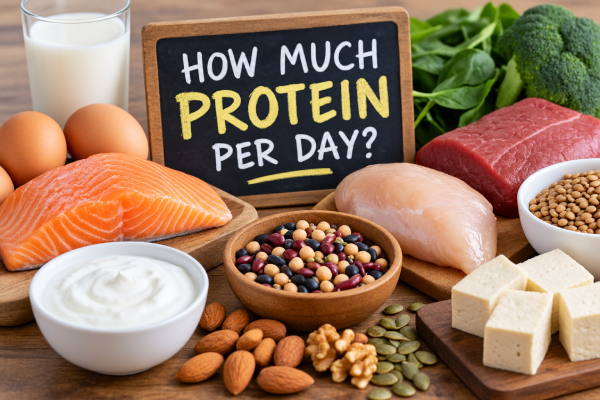
But how much protein do you actually need?
Protein is important, but more isn’t automatically better. Your individual needs depend on factors such as your body size, age, activity level and health.
Why Do We Need Protein?
Protein is one of the nutrients your body needs every day.
It helps your body:
- Build and maintain muscle
- Repair tissues
- Heal wounds
- Fight infection
- Make enzymes and hormones
- Maintain many normal body functions
Protein is especially worth paying attention to when you’re losing weight because you don’t want all of the weight you lose to come from lean tissue.
How Much Protein Do You Need?
A commonly used baseline recommendation for healthy adults is 0.8 grams of protein per kilogram of body weight per day.
You can estimate that amount with a simple calculation:
Body weight in pounds ÷ 2.2 × 0.8 = grams of protein per day
For example, for someone weighing 165 pounds:
165 ÷ 2.2 = 75 kilograms
75 × 0.8 = 60 grams of protein per day
That gives you about 60 grams of protein per day.
Keep in mind that this is a general baseline. It isn’t necessarily the ideal amount for every person.
A Quick Protein Reference
Using the 0.8 gram-per-kilogram calculation, the numbers look approximately like this:
| Body Weight | Protein Per Day |
|---|---|
| 120 lb | 44 g |
| 140 lb | 51 g |
| 160 lb | 58 g |
| 180 lb | 65 g |
| 200 lb | 73 g |
| 220 lb | 80 g |
| 240 lb | 87 g |
Your individual target may be different depending on your circumstances.
Do You Need More Protein as You Get Older?
Getting enough protein becomes particularly important as we age because maintaining muscle becomes more challenging.
But protein is only part of the picture.
Physical activity—and especially resistance or strength exercise—also helps preserve muscle.
Rather than assuming everyone needs a huge amount of protein as they get older, it’s better to think about protein as one part of maintaining strength and lean body mass.
Protein and Weight Loss
Protein can be particularly useful during weight loss.
Protein-containing foods can help with fullness, and adequate protein combined with physical activity can help support the maintenance of lean tissue while you’re losing weight.
But eating extra protein doesn’t somehow cancel out calories.
Protein still provides calories—about 4 calories per gram.
If you’re trying to lose weight, your overall calorie intake still matters.
That’s one reason tracking both calories and protein can be useful. You can see whether you’re getting enough protein while still staying within your calorie goal.
What Foods Contain Protein?
Protein can come from both animal and plant foods.
Animal Sources
Common sources include:
- Fish
- Chicken and turkey
- Beef and pork
- Eggs
- Milk
- Yogurt
- Cottage cheese
- Other cheeses
When choosing animal proteins, leaner choices can help reduce saturated fat.
Plant Sources
Plant sources include:
- Beans
- Lentils
- Peas
- Soy foods such as tofu
- Nuts
- Seeds
- Nut butters
- Whole grains
You don’t necessarily have to choose between animal and plant protein.
For many people, a combination of both can provide plenty of variety.
Do You Need Protein Powder?
Not necessarily.
It’s entirely possible for many people to get enough protein from ordinary food.
Protein powders and shakes can be convenient, especially when someone has difficulty meeting their protein needs through food alone. But they’re a supplement, not a requirement.
If you use one, read the entire Nutrition Facts label.
Look at the calories, protein, added sugar, saturated fat and serving size rather than focusing only on the large “20 grams of protein!” printed on the front of the package.
What If You Have Kidney Disease?
This is where a general online protein calculation may not be appropriate.
Your kidneys help remove waste products produced when your body processes protein.
If you have chronic kidney disease, the amount of protein that’s right for you can depend on your kidney function, body size, nutritional status, laboratory results and treatment.
People with CKD who aren’t receiving dialysis may sometimes be advised to eat less protein.
People receiving dialysis generally need more protein because protein can be lost during treatment.
That means two people with kidney disease may receive very different protein recommendations.
If you have kidney disease, don’t assume that a high-protein diet is automatically better—or that you should dramatically restrict protein on your own.
Ask your doctor or kidney dietitian for your individual protein target.
Once you have that number, tracking your food can help you stay within it.
Can You Eat Too Much Protein?
More protein isn’t necessarily better.
Once you’ve met your body’s needs, continually adding protein doesn’t automatically result in more muscle or faster weight loss.
Very high-protein diets may also be inappropriate for some people, particularly those with certain kidney conditions.
Instead of trying to eat as much protein as possible, think about getting an appropriate amount for you.
Spread Protein Throughout the Day
If most of your protein comes at dinner, you might find it helpful to include some at other meals too.
For example:
Breakfast: Eggs, milk, yogurt or cottage cheese
Lunch: Chicken, tuna, beans or lentils
Snack: Yogurt, nuts or a small amount of nut butter
Dinner: Fish, poultry, lean meat, beans or tofu
You don’t have to eat protein every waking hour.
The idea is simply to build meals that provide protein along with the other foods your body needs.
Look at the Whole Food
Just as we’ve seen with saturated fat, added sugar and fiber, one number doesn’t tell you everything about a food.
Something can be high in protein and also high in calories, saturated fat, sodium or added sugar.
Another protein food might also give you fiber, healthy fats, vitamins or minerals.
That’s why it’s useful to look beyond the big claims on the front of the package and check the Nutrition Facts label.
Don’t Turn Protein Into a Competition
Protein is important.
But you don’t win a prize for eating the most of it.
Figure out an appropriate target for you, look for protein foods you enjoy, and pay attention to how protein fits into your overall calorie and nutrition goals.
If you’re tracking your food, you don’t have to guess.
You can look at what you’re actually eating and make adjustments from there.
The goal isn’t more protein.
The goal is enough protein for you.
This information is for general educational purposes and isn’t intended to replace individualized medical or nutritional advice.