
If you track what you eat, fiber is one of those numbers that’s worth paying attention to.
Unlike protein, fat and carbohydrates that your body digests and absorbs, dietary fiber passes through your digestive system largely undigested. But that doesn’t mean it isn’t doing anything along the way.
Fiber plays an important role in digestive health, and a diet rich in fiber can have benefits that go well beyond keeping you regular.
So how much fiber do you actually need?
How Much Fiber Should You Eat?
The FDA Daily Value for fiber is 28 grams per day based on a 2,000-calorie diet.
Recommendations can also vary according to age and sex.
| Age | Women | Men |
|---|---|---|
| 50 or younger | 25 g | 38 g |
| Over 50 | 21 g | 30 g |
You don’t necessarily have to hit your fiber target perfectly every single day. Looking at your eating pattern over time can be more useful than worrying about one day’s number.
What Does Fiber Do?
Fiber does quite a bit more than help prevent constipation.
A diet containing adequate fiber can help:
- Keep bowel movements regular
- Support digestive health
- Help you feel full longer
- Support healthy cholesterol levels
- Help moderate blood sugar
- Support a healthy eating pattern
High-fiber foods also tend to bring other nutrients along with them.
A bowl of beans, for example, doesn’t just provide fiber. It also provides protein, vitamins and minerals. Fruits and vegetables provide fiber along with a variety of vitamins, minerals and other beneficial plant compounds.
That’s one reason getting fiber from food can be especially valuable.
Soluble Fiber and Insoluble Fiber
You may have heard fiber described as soluble or insoluble.
Both are important.
Soluble Fiber
Soluble fiber dissolves in water and forms a gel-like material during digestion.
Foods containing soluble fiber include:
- Oats
- Beans and peas
- Apples
- Citrus fruits
- Carrots
- Barley
Soluble fiber can help slow digestion and can play a role in maintaining healthy cholesterol and blood sugar levels.
Insoluble Fiber
Insoluble fiber doesn’t dissolve in water. It adds bulk to stool and helps food and waste move through the digestive system.
Sources include:
- Whole grains
- Wheat bran
- Nuts
- Beans
- Vegetables
You don’t need to keep a running tally of how many grams of soluble and insoluble fiber you’re eating. Most plant foods contain a mixture of different types of fiber.
Eating a variety of fiber-rich foods is a much simpler approach.
What Foods Are High in Fiber?
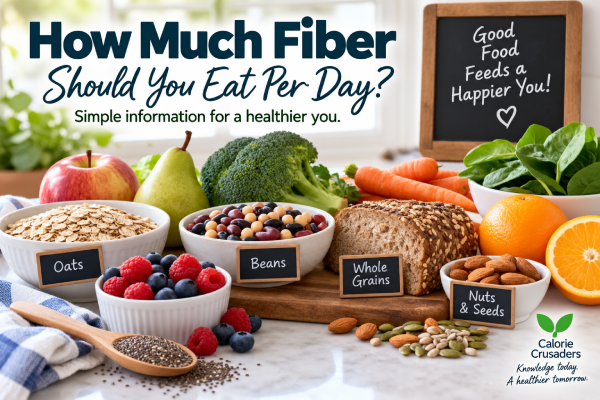
Some particularly good sources of fiber include:
- Beans, peas and lentils
- Whole grains
- Oatmeal
- Bran
- Berries
- Apples and pears with the skin
- Oranges
- Broccoli
- Carrots
- Green peas
- Nuts and seeds
One of the easiest ways to increase fiber is simply to include more plant foods in meals you’re already eating.
You don’t necessarily need special “high-fiber” foods.
Adding beans to soup, choosing whole-grain bread, eating a piece of fruit with breakfast or adding vegetables to dinner can all contribute to your daily total.
Can Fiber Help With Weight Management?
Fiber-rich foods can be helpful when you’re trying to manage your weight because fiber can help you feel full.
Many naturally fiber-rich foods also provide quite a bit of food volume for their calories.
But fiber isn’t a magic weight-loss ingredient.
A food doesn’t automatically become a good choice simply because the package says “high fiber.” Calories and the rest of the nutritional picture still matter.
As always, look at the whole food rather than one number on the label.
Can You Increase Fiber Too Quickly?
Yes, and this is important.
If you’ve been eating relatively little fiber and suddenly begin eating a lot more, your digestive system may object.
Increasing fiber too quickly can cause:
- Gas
- Bloating
- Abdominal discomfort
- Cramping
- Changes in bowel movements
That doesn’t necessarily mean fiber is bad for you. It may simply mean you’ve increased it faster than your digestive system is accustomed to.
Increase fiber gradually and give your body time to adjust.
Don’t Forget Fluids
Fiber and fluids work together.
Fiber absorbs water, which helps keep stool softer and easier to pass. As you increase your fiber intake, make sure you’re also getting adequate fluids.
This is especially important if you’re adding concentrated sources of fiber such as bran or a fiber supplement.
People who have been given specific fluid restrictions by a healthcare professional should follow their individualized instructions rather than simply increasing fluid intake.
Food or Fiber Supplements?
For most people, food is a great place to start.
Whole foods provide fiber along with vitamins, minerals, protein and other nutrients that a fiber supplement may not provide.
But fiber supplements can be useful in certain circumstances.
If you’re considering a supplement, remember that adding a large amount all at once can cause the same digestive problems as suddenly increasing fiber from food.
Start gradually and follow the product directions or advice from your healthcare professional.
Read the Nutrition Facts Label
Fiber is listed on the Nutrition Facts label under Total Carbohydrate.
The FDA Daily Value is 28 grams, so the percentage Daily Value can give you a quick way to compare products.
As a general rule:
5% Daily Value or less is considered low.
20% Daily Value or more is considered high.
But don’t forget to check the serving size. If you eat twice the listed serving, you’re also getting twice the listed fiber.
Don’t Turn Fiber Into Another Number to Obsess Over
Tracking fiber can teach you a lot about the way you’re eating.
If you’re consistently getting very little fiber, your food diary may show you exactly where you could make some simple changes.
Maybe you could add a piece of fruit. Maybe you could choose whole-grain bread. Maybe beans could make an appearance at dinner a little more often.
You don’t have to go from 10 grams of fiber to 30 grams overnight.
In fact, you probably shouldn’t.
Increase it gradually, pay attention to how your body responds, and look for fiber-rich foods that you actually enjoy eating.
The goal isn’t to chase a perfect number.
The goal is to build an eating pattern you can live with.
This information is for general educational purposes and isn’t intended to replace individualized medical or nutritional advice.