
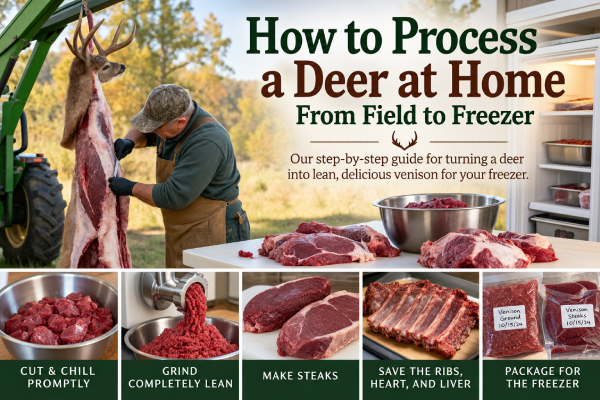
Learning how to process a deer at home can save money and provide your family with delicious, lean meat. My husband, Glenn, has been processing our venison for years. We’ve developed a system that works well for us. It helps us get the meat into the refrigerator quickly and preserve its fresh flavor.
We don’t hunt for sport. Glenn only hunts when we need venison for the freezer. We use as much of the deer as possible, and very little goes to waste.
Venison is also a wonderful choice for anyone counting calories. It’s naturally lean, high in protein, and versatile enough for many family meals.
Start With a Cool Hunting Day
Glenn prefers to hunt when the weather is cool or cold. He avoids warm days because heat makes it harder to keep the meat fresh.
Once he harvests a deer, he begins processing it promptly. We believe this is one of the most important steps in producing good-tasting venison.
Meat that stays warm too long can develop unpleasant flavors and become unsafe to eat. Quick, careful handling helps preserve quality.
Food safety tip: Cool weather helps, but it doesn’t replace proper refrigeration. Field-dress the deer promptly, avoid contaminating the meat, and chill it as quickly as possible. Keep refrigerated meat at 40°F or below, preferably between 34°F and 37°F.
Our Deer Processing Setup
We prepare our work area before Glenn begins.
We have several pieces of equipment that make the job easier:
- A tractor for hoisting the deer
- A very sharp fillet knife
- A reciprocating saw, commonly called a Sawzall
- A water hose with a nozzle
- A large tub for collecting the internal organs
- 2 large stainless steel bowls for carrying meat
- A refrigerator dedicated to processing
- A large plastic cutting board
- An electric meat grinder
- A FoodSaver vacuum sealer
- Large freezer bags
Our cutting board is approximately three feet by two feet. It gives us plenty of room to work when we’re preparing the meat for freezing.
We also have an extra refrigerator. During deer season, we clear it out so there’s plenty of room for venison.
That extra refrigerator is one of the most useful things we have!
Skinning and Cutting Up the Deer
Glenn uses our tractor to hoist the deer by the head or antlers. A sturdy tree limb and properly rated hoisting equipment can also work.
He uses a sharp fillet knife to remove the hide from the body. He doesn’t bother skinning the head because we don’t use that portion.
A sharp knife makes a tremendous difference. It allows him to work efficiently and remove as much usable meat as possible.
Glenn also uses a reciprocating saw when cutting through the ribs.
Important safety precautions: Proper field dressing and removal of the internal organs should take place promptly. Keep the carcass stable while working. Use clean, food-safe tools and protect exposed meat from dirt, hair, and intestinal contents. A saw used for processing meat should have a clean blade dedicated to that purpose.
We keep a water hose nearby for cleanup. However, it’s important to avoid spraying dirty water onto exposed meat. Use potable water only when rinsing is necessary, and sanitize equipment and work surfaces.
In areas where chronic wasting disease (CWD) is a concern, follow local wildlife-agency recommendations. Avoid cutting through the brain or spinal column, and follow testing guidance before consuming the meat.
Getting the Venison Into the Refrigerator Quickly
This is where our teamwork comes in.
Glenn does most of the cutting. As he removes usable meat, he places it into a large stainless steel bowl.
I regularly take the bowl of meat directly to the refrigerator.
And he continues, using the 2nd bowl.
Then I bring the 1st bowl back so he can work continuously.
We repeat this process until the deer is finished.
Our goal is simple: Get the meat chilled as quickly as possible.
We believe this helps explain why our venison has such a good flavor.
Proper chilling slows bacterial growth and helps prevent spoilage. It can also reduce unpleasant flavors caused by poor handling.
Of course, some natural game flavor depends on the animal’s age, diet, and other factors.
For safety, meat should be placed in shallow containers or spread in a single layer so it cools quickly. Avoid piling large amounts of warm meat into a deep bowl. Check refrigerator temperatures and avoid overloading the refrigerator with warm meat.
We Use Almost Everything
Glenn works carefully to remove as much usable meat as possible.
We save the meat for grinding and steaks. We also save the ribs, heart, and liver when they’re suitable for consumption.
The ribs are especially good on the barbecue!
We can freeze them in a two-gallon Ziploc freezer bag until we’re ready to cook them.
Organ meats require particularly careful handling. Refrigerate them promptly and use or freeze them within a short period. Always inspect the organs and discard anything abnormal. Follow local CWD guidance regarding which tissues should not be eaten.
Refrigerating the Venison Before Final Processing
Once we’ve finished cutting up the deer, we leave the meat in the refrigerator for about one day.
Sometimes we spread the meat on trays. Other times we refrigerate it in bowls, depending on how much meat we have.
The important thing is to keep everything properly chilled.
This short refrigerated rest fits our schedule. It also gives us time to prepare for the next stage.
We aren’t trying to perform a long aging process. We’re simply keeping the meat cold until we’re ready to grind, cut, and package it.
For food safety, meat should be spread in shallow layers with good air circulation rather than stacked in deep containers. Keep the refrigerator at 40°F or below and verify that the meat cools promptly.
Preparing Ground Venison and Steaks
The next day, we bring out our large cutting board and electric meat grinder.
Our electric grinder makes the job much faster and easier than grinding by hand.
We prepare two main types of meat.
Ground Venison
Glenn grinds our venison completely lean.
We don’t add beef fat, pork fat, or any other fat.
It’s simply pure ground venison.
This makes it an excellent choice for many of our favorite recipes. We can use it in spaghetti, chili, meatloaf, hamburgers, and casseroles.
Ground venison is especially useful when we’re counting calories because it contains much less fat than many varieties of ground beef.
Venison Steaks
We also cut plenty of steaks.
Venison steaks are delicious on the barbecue. We enjoy them grilled, and they make a wonderful family meal.
Another advantage is their versatility.
If we need stew meat later, we simply thaw a package of steaks in the refrigerator and cut them into cubes.
That way, we don’t have to decide ahead of time exactly how much stew meat we’ll need.
Food safety tip: Keep meat cold while cutting and grinding. Work in manageable batches, returning unused portions to the refrigerator. Ground venison should be cooked to 160°F. Whole venison steaks should reach at least 145°F and rest for three minutes, according to USDA guidance.
Nonnie’s Beef Stew
Glenn’s Tip for Grilling Venison Hamburgers
Because our ground venison is completely lean, it doesn’t hold together quite like ground beef.
Glenn has a simple solution.
Add one egg to every pound of ground venison when making hamburger patties.
The egg helps bind the meat together so the burgers are less likely to fall apart on the grill.
One large egg adds approximately 70 calories to the entire pound of meat.
If you make four patties, that’s only about 18 additional calories per hamburger.
It’s a small addition that makes grilling lean venison much easier.
Packaging Venison for the Freezer
Once the meat is prepared, we’re ready to package it.
We have a FoodSaver vacuum sealer, which we really like. Removing air from the package helps protect the meat from freezer burn.
Sometimes we also use Ziploc freezer bags.
When using freezer bags, we press out as much air as possible before sealing them.
We package our ground venison and steaks in amounts that are convenient for future meals.
Then everything goes into the freezer.
Label each package with the contents and date. Freeze meat promptly at 0°F or below. Properly frozen venison remains safe while continuously frozen, although flavor and texture gradually decline over time.
Vacuum sealing is particularly helpful for maintaining quality during longer freezer storage.
Why Venison Is Great for Counting Calories
One reason we enjoy venison is its nutritional value.
Venison is naturally rich in protein. It also provides iron, zinc, and vitamin B12.
And when you trim away the visible fat and grind the meat without adding anything, it can be especially lean.
Here is an approximate comparison for a four-ounce portion of raw meat.
| Meat | Calories | Protein |
|---|---|---|
| Lean ground venison | 135–160 | 24–26 g |
| 90% lean ground beef | 195–200 | 22–23 g |
| 80% lean ground beef | 285–290 | 19–20 g |
Nutrition values are estimates. Actual venison nutrition depends on the cut, animal, and trimming. Ground beef values depend on the fat percentage. For accurate calorie counting, use the nutritional entry that best matches your meat and whether it’s weighed raw or cooked.
For our family, venison is an economical source of protein because we process it ourselves.
It’s also a wonderful way to enjoy some of our favorite meals while keeping calories manageable.
A Few More Food Safety Reminders
Home deer processing requires care. Before processing, review current recommendations from your state wildlife agency and a university extension service.
Keep these precautions in mind:
- Wear clean, disposable gloves when field dressing and handling raw meat.
- Prevent contact between edible meat and intestinal contents.
- Clean and sanitize knives, cutting boards, grinders, and other equipment.
- Keep raw venison separate from ready-to-eat foods.
- Chill meat promptly and maintain safe refrigerator temperatures.
- Follow local chronic wasting disease testing and handling guidance. Never eat meat from an animal that tests positive for CWD.
- Use a food thermometer to verify safe cooking temperatures.
These precautions help protect the quality of the meat and the health of everyone who eats it.
From Our Freezer to Our Dinner Table
Processing our own venison takes some work, but it’s worth it.
Glenn handles the cutting, and I help keep the meat moving into the refrigerator. Later, we prepare it for the freezer.
It’s a system we’ve developed over the years, and it works well for our family.
We know how the meat was handled. We know exactly what’s in our ground venison. And we have a freezer stocked with lean protein for future meals.
Best of all, we can enjoy delicious venison steaks, hamburgers, spaghetti, and stew without giving up the foods we love.
That’s what Calorie Crusaders is all about. We’re learning to make the most of the foods we enjoy while keeping our calories under control.
Weight Loss Calorie Calculator
Calorie Crusaders Tip: If you’re using venison in a recipe that normally calls for ground beef, remember to adjust the calories. Completely lean ground venison can make a noticeable difference in the total calories of a dish.