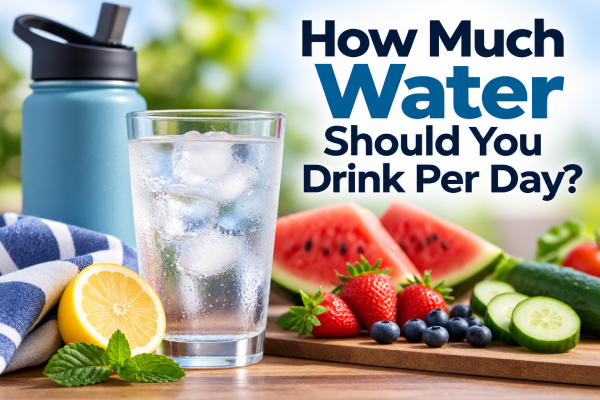
You may have wondered, how much water should I drink per day? We’ve all heard that we should drink eight glasses of water a day. But our water needs aren’t quite that simple.
Your body needs water every day. How much you need can depend on your age, activity, health, environment, and even the weather.
Why Does Your Body Need Water?
Water does a lot more than satisfy your thirst.
Your body uses water to help:
- Regulate body temperature
- Carry nutrients
- Support digestion
- Keep joints and tissues working properly
- Produce saliva, sweat, and other body fluids
- Remove waste through urine and bowel movements
- Maintain the proper balance of fluids in your body
Water is essential. Every part of your body depends on it.
CDC – About Water and Healthier Drinks
How Much Water Do You Need?
The National Academies provide these general guidelines for healthy adults:
| Total Water Per Day | |
|---|---|
| Women | About 2.7 liters, or 11.5 cups |
| Men | About 3.7 liters, or 15.5 cups |
But here’s something important.
That doesn’t mean women need to drink 11.5 cups of plain water and men need to drink 15.5 cups of plain water every day.
These amounts include water from beverages and food. Your individual needs may vary depending on your activity level, the weather, and your health.
In the data used to establish these guidelines, about 80% of total water came from beverages and about 20% came from food.
Find Your Personal Hydration Goal
Everyone’s hydration needs are a little different. Our Daily Hydration Calculator helps you estimate how much water you may need based on your weight, activity level, and time spent in hot weather.
Try our Daily Hydration Calculator to find a starting point for your daily hydration goal.
National Academies – Dietary Reference Intakes for Water
Mayo Clinic – Water: How Much Should You Drink Every Day
Does Food Really Count?
Absolutely.
Many foods contain quite a bit of water.
Some good examples include:
- Watermelon
- Strawberries
- Oranges
- Grapes
- Tomatoes
- Cucumbers
- Lettuce
- Celery
- Soups
Milk and other beverages also contribute to your daily fluid intake.
Do Coffee and Tea Count?
Yes.
Coffee and tea contribute to your daily fluid intake.
You may have heard that coffee doesn’t count because caffeine makes you lose water. Moderate amounts of caffeinated beverages can still contribute to hydration.
Of course, what you add to your coffee or tea matters if you’re also watching calories and added sugar.
What About the Eight Glasses a Day Rule?
Eight 8-ounce glasses equals 64 ounces of water.
That’s an easy number to remember, but it isn’t a universal requirement.
Some people need more. Others may need less.
Your body size, activity, environment, health, and diet can all affect your needs.
Rather than thinking that everyone must drink exactly eight glasses, think of hydration as something that varies from person to person.
Hot Weather and Exercise Can Increase Your Needs
When you sweat, you lose water.
That means you may need more fluids when you’re exercising, working outside, or spending time in hot weather.
Illness can also increase fluid needs, especially when you have a fever, vomiting, or diarrhea.
Pay extra attention to hydration on those days.
How Can You Tell If You’re Getting Enough?
Thirst is one of your body’s signals that you need fluid.
Urine color can also provide a useful clue.
Pale yellow urine generally suggests that you’re well hydrated. Darker urine can be a sign that you need more fluid.
There are exceptions, though. Certain foods, vitamins, medications, and medical conditions can change urine color.
Does Water “Flush Out” Your System?
You’ll sometimes hear that drinking water “flushes toxins” from your body.
That’s an oversimplification.
Your kidneys, liver, digestive system, lungs, and other organs are constantly doing the work of processing and removing waste.
Water supports these normal processes. Your kidneys need water to make urine, which carries wastes out of your body.
But drinking extra water doesn’t simply wash away everything you’ve eaten.
For example, water doesn’t cancel out the calories from sugar or erase the sodium from a salty meal.
Think of water as something your body needs in order to do its job, rather than as a cleanser that washes unhealthy foods away.
Can Drinking Water Help With Weight Loss?
Water contains no calories.
That’s one reason it can be helpful when you’re trying to lose weight.
Replacing a regular soda, sweet tea, or another sugary drink with water can reduce the number of calories you consume.
Water may also help some people feel fuller, particularly when they drink it with or around meals.
But water itself isn’t a fat-burning treatment.
It’s simply a very good calorie-free beverage.
Can You Drink Too Much Water?
Yes.
More isn’t always better.
Drinking extremely large amounts of water in a short period can dilute the sodium in your blood. This can become dangerous.
Some people also need individualized fluid recommendations because of certain medical conditions or medications.
If your healthcare provider has given you a specific fluid goal or fluid restriction, follow that advice rather than a general hydration recommendation.
Simple Ways to Drink More Water
If you have trouble remembering to drink, try making water part of your normal routine.
You might:
- Keep a water bottle nearby
- Drink water with meals
- Have a glass when you wake up
- Drink before, during, and after physical activity
- Add lemon, lime, cucumber, or fruit for flavor
- Choose water instead of a sugary drink sometimes
You don’t have to make it complicated.
Water Is Part of the Bigger Picture
Good nutrition isn’t just about calories, protein, fiber, saturated fat, sugar, or sodium.
Water matters too.
You don’t have to obsess over a perfect number of ounces every day. Pay attention to your thirst, your activity, the weather, and what your body is telling you.
And remember that water from foods and other beverages counts too.
Staying hydrated is simply one more tool we can use as we work toward healthier habits.
That’s what Calorie Crusaders is all about.